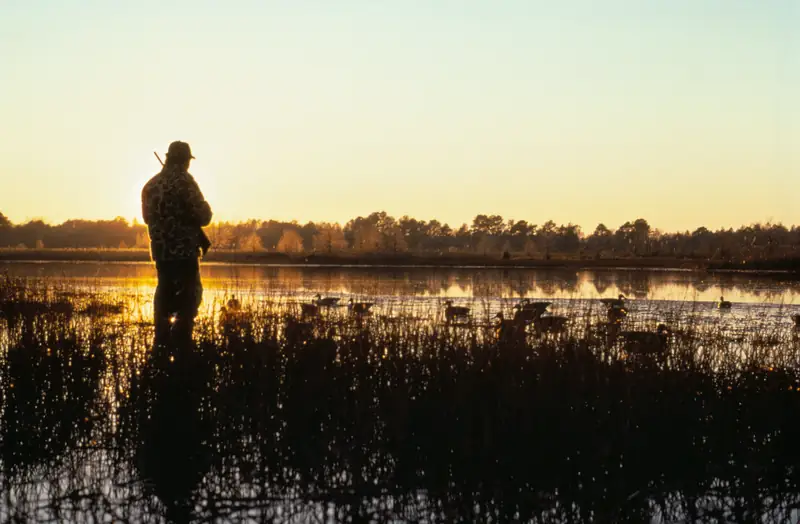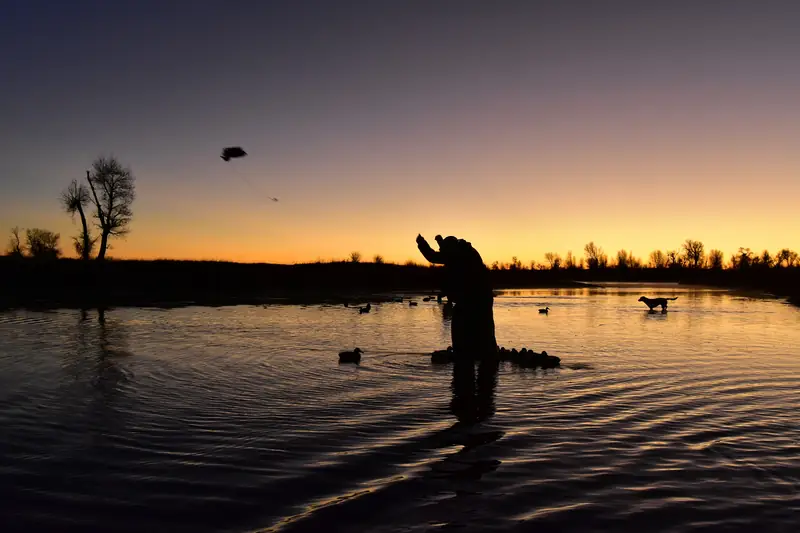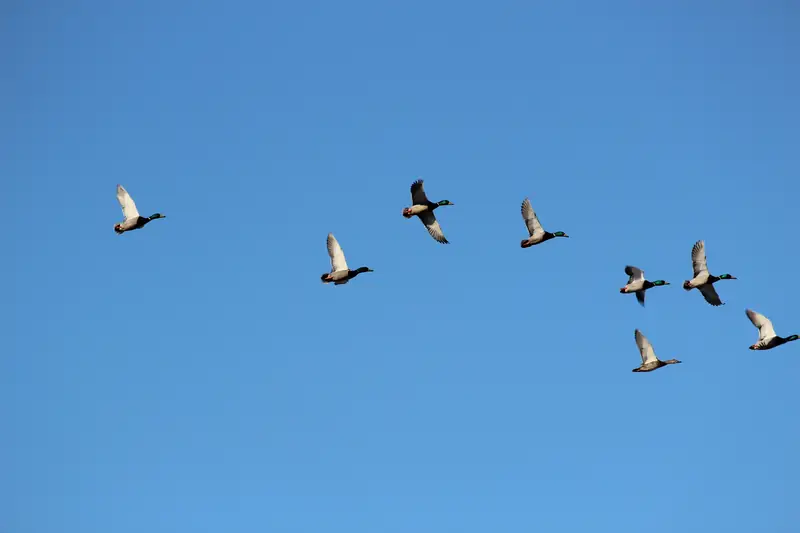
Public-land duck hunting in the Mid-South is mostly a paperwork test you take at 4 a.m. in the dark. Most tickets on WMAs aren't for shooting a hen too many. They're for a missing stamp, a lead shell in a vest pocket, too many shells on an Arkansas WMA, or still being on the water at 1:15 p.m.
Print this page and keep it in the truck. Everything below was last checked Oct 22, 2026 against the linked state pages. Fees are the agencies' listed prices and don't include vendor fees. Our state law pages have the full detail: Arkansas, Mississippi, Tennessee.
Part 1: Paperwork, by state
Every state, every hunter 16 and older
- Federal Duck Stamp, signed in ink across the face, or an E-Stamp. It's valid July 1–June 30 and good in every state (USFWS). Price: AGFC lists the paper stamp at $25 (AGFC Guidebook p. 14). The USFWS page we checked didn't show a price.
- HIP certification in each state you hunt. It's free at license vendors. Louisiana says plainly that you must be HIP certified in each state (LDWF licensing guide).
Arkansas (full page)
- Hunting license. The resident minimum is the Wildlife Conservation License ($10.50). Nonresidents: 3-day small game $80, annual small game $110 (Guidebook p. 14)
- Arkansas Waterfowl Stamp: $7 resident, $50 nonresident (p. 14)
- Proof of Arkansas HIP (pp. 14–15)
- Nonresidents on any WMA: a nonresident WMA waterfowl permit, either 3-day ($40, up to 10) or 30-day ($200) (pp. 14, 42)
- No Arkansas license? A $10.50 WMA/Lake Conservation Permit for AGFC WMAs (p. 4). The guidebook says the old free WMA General Use Permit has been eliminated. AGFC's web page still mentions it, so call AGFC (833-345-0325) if you're unsure.
- Hunter ed card if born after 1968, unless your license shows "HE-VERIFIED" (p. 16)
- Refuge permit for any NWR you hunt (for example, the signed brochure permit at Cache River NWR)
Mississippi (full page)
- Hunting license. The resident minimum is Small Game/Freshwater Fishing ($10); nonresident Small Game is $95 a year or $38 for 7 days (MDWFP prices)
- Mississippi Waterfowl Stamp: $10 resident, $19 nonresident (same source)
- HIP (shows "MB" on the card, or "HIP" on a paper license) (MDWFP digest)
- WMA User Permit: $15 resident, $30 nonresident (MDWFP prices)
- Shortcut for residents: the $35 Waterfowl Hunter Package covers the license, WMA permit, state stamp and HIP, but not the federal stamp (same source)
- North Mississippi NWR permit, $15, for Coldwater River, Dahomey, Tallahatchie and Noxubee (same source)
- Residents 65+: no license needed, but you still need both stamps and HIP (MDWFP)
- Check in and out on WMAs (HuntFish app or the daily visitor card) (MDWFP WMA rules)
Tennessee (full page)
- Resident: Combo Hunt/Fish ($33) plus the Waterfowl Supplemental ($37), or an Annual Sportsman ($165) (TWRA 2026-27 guide, p. 8)
- Nonresident: 7-day ($61) or annual ($110) small game/waterfowl (pp. 9–10)
- Tennessee Migratory Bird Permit, $1 (no fee with Sportsman or Lifetime licenses) (p. 10)
- WMA Small Game & Waterfowl permit on WMAs coded "WF": $61 a year or $12 a day. Sportsman and Lifetime holders are exempt; nonresidents always need it (pp. 11, 82)
- Reelfoot: Reelfoot Lake Preservation Permit ($3 a day, $10 for 3 days, $16 a year) unless exempt (p. 11)
- Hunter ed if born on or after Jan 1, 1969 (p. 7)
- Quota-hunt permit or blind draw paperwork, if drawn
Louisiana
- Basic Hunting License plus a Waterfowl License (or a Sportsman's Paradise, lifetime or senior license). Nonresidents also have 5-day and 10-day options (LDWF licensing guide)
- The Louisiana state duck stamp is a collectible, not required (same source)
- HIP. Hunters 17 and under don't need it unless they're in a WMA youth waterfowl lottery hunt (same source)
- WMA access permit for LDWF WMAs. Not confirmed Prices are on the LDWF fee list; that page blocked our checks, so we haven't confirmed current prices.
Part 2: The rules that catch people out
| Rule | Where | Source (checked Oct 22, 2026) |
|---|---|---|
| Shooting ends at noon Nov 21–Jan 30 (sunset Jan 31 and Feb 6–7) | All Arkansas WMAs unless a WMA's rules say otherwise | AGFC Guidebook p. 41 |
| Off the water by 1 p.m. (noon on Black River and Bayou Meto) | Arkansas WMAs | Guidebook p. 41 |
| 25 shells max; no shot larger than No. 2 | Arkansas "Common Restriction A" WMAs (e.g. Dagmar, Black Swamp) | Guidebook pp. 42, 44 |
| No boats Nov 14–20, Nov 30–Dec 9, Dec 24–25, Feb 1–5 | Common Restriction A WMAs | Guidebook pp. 4, 44 |
| Rest areas closed Nov 1–Feb 15 | Arkansas WMAs | Guidebook p. 44 |
| Boats single file, 100 ft apart | Arkansas WMAs and NWRs | Guidebook pp. 42–43 |
| Hunting until noon; gear and boats out by 1 p.m.; 100 yards between parties | Cache River NWR | Cache River NWR |
| Shooting ends at 3 p.m. | Reelfoot Lake | Reelfoot guide |
| Temporary blinds at least 200 yards from Tier 1, 2 or 4 sites; take blinds and decoys out daily | Tennessee tier-system WMAs | TWRA guide p. 83 |
| Opening-day possession limit is 1× the daily bag (2× on day two) | Tennessee | TWRA guide pp. 55–56 |
| Free-lance days are limited; check the hunt-day list | Mississippi WMAs | MDWFP hunt days |
| Draw-hunt parties sign in by 5 a.m.; many units close at noon, out by 1 p.m. | Mississippi draw WMAs | MDWFP draw procedures |
| No shooting within 200 yards of a building; pick up your hulls; no drones | Mississippi WMAs | MDWFP WMA rules |
| No paid guiding | AR WMAs and NWRs; MS WMAs | Guidebook pp. 15, 41; MDWFP WMA rules |
| Floodwater over the banks isn't public water | MS public waters; TN–AR river agreement (MS–AR agreement covers MS waterways) | MDWFP digest; AGFC H1.03 |
| Nontoxic shot only, and no lead on you | Everywhere, for ducks | State law pages |
| Gun plugged to 3 shells | Everywhere (except light-goose conservation seasons) | 50 CFR 20.21 |
| No shooting from a boat until the motor is off and the boat has stopped | Everywhere | 50 CFR 20.21(e) |
| No electronic calls for ducks | Everywhere | 50 CFR 20.21(g) |
| Keep one fully feathered wing or the head on each bird until home | Everywhere | 50 CFR 20.43 |
Part 3: Gear checklist
On you
- Waders (leak-tested), wading belt
- Layers: base, insulating, waterproof shell; gloves; warm hat
- Headlamp, plus a backup light
- Life jacket or inflatable belt pack (in the boat, wear it)
- Licenses, stamps and permits in a zip bag
- Phone in a waterproof case; offline maps loaded
- Calls on a lanyard
Gun and shells
- Shotgun, plugged; floating case
- Nontoxic shells only; count them on 25-shell WMAs
- Choke tube and wrench
Spread
- Decoys rigged for the water depth; spare weights and line
- Spinning-wing or jerk cord, if legal where you hunt
- Mesh decoy bag (no plastic or metal decoy containers at Reelfoot)
Boat
- Navigation lights working, spotlight, spare bulbs
- Paddle or push pole, anchor, bow line
- Throwable, horn or whistle, bilge pump
- Spare prop and tools; extra fuel
- Registration and boater ed card
Dry bag
- Full change of clothes
- Fire starter, first-aid kit, space blanket
- Water and food
- Trash bag for hulls and litter
Blind and dog
- Portable blind or boat-blind cover (no cutting where it's banned)
- Dog vest, stand, first-aid kit
Draw deadlines and season openers, sent before they close.
We're setting up short email alerts for Arkansas, Tennessee, Mississippi and Louisiana. There's nothing to sign up for yet. Check back here.
Part 4: Safety
- File a float plan. Text someone where you're launching, where you're hunting, and when you'll be back.
- Cold water is the real danger. A small, loaded boat, cold water and a life jacket under the seat is how good hunters drown. Wear yours while you're running.
- Overloading: check the capacity plate and count dogs and decoys in the weight.
- Low water this year means new sandbars, exposed stumps and steep, muddy ramps. Run slower than last year.
- Fog: carry a GPS track of your route in, and don't run blind.
- Zones of fire: agree on them before the first bird comes in. Never swing past your partner.
Part 5: Etiquette and spacing
- First come, first served is the rule on most freelance water. On Cache River NWR it's written down: the first party there has the spot unless it invites others (Cache River NWR).
- Give room. Cache River NWR requires 100 yards between parties. Even where no number is written, 200 yards in open water keeps the peace.
- Don't set up on someone's flight line or in the hole they're working with a spread out. If you see lights, keep going.
- Kill your spotlight when you're near another blind or a boat that's setting out.
- Idle past set-up hunters after shooting time. Don't run through their spread.
- Don't sky-bust. Birds circling another spread aren't yours.
- Pick up every hull. Some areas require it (Mississippi WMAs, Cache River NWR), and it's how public land stays open.
- Be off on time. The 1 p.m. rule is how the birds get to rest, and why there are birds the next morning.
Print tip: this page prints cleanly on two pages with the gear list on page 2. Something out of date? Tell us at the contact page.
FAQ
Do I need a WMA permit to duck hunt in Mississippi?
Yes. On state WMAs you need a WMA User Permit ($15 resident, $30 nonresident) plus your license, both duck stamps and HIP (MDWFP, checked Oct 22, 2026).
How many shells can I carry on an Arkansas WMA?
On Common Restriction A WMAs such as Dagmar and Black Swamp, 25 shells per hunter for waterfowl, with shot no larger than No. 2. There's no shell limit on Feb 6–7 (AGFC Guidebook pp. 42, 44, checked Oct 22, 2026).
What time does duck hunting end on Arkansas WMAs?
Noon from Nov 21 to Jan 30, unless a WMA's own rules say otherwise. You must be off the water by 1 p.m. (AGFC Guidebook p. 41, checked Oct 22, 2026).
Do I need a Louisiana duck stamp?
No. LDWF says the state duck stamp is a collectible and isn't required. You still need a Basic Hunting License plus a Waterfowl License, the Federal Duck Stamp and HIP (LDWF, checked Oct 22, 2026).
Dates, rules and prices on this page were last checked Oct 22, 2026. If an agency page and this article disagree, the agency page wins.
See something wrong or out of date? Report a correction.
We hunt public water in the Mid‑South and write from the agencies’ own pages. Every rule, date and fee links to its official source and shows the day we checked it. Where we couldn’t confirm something, we say so.
How we check our facts