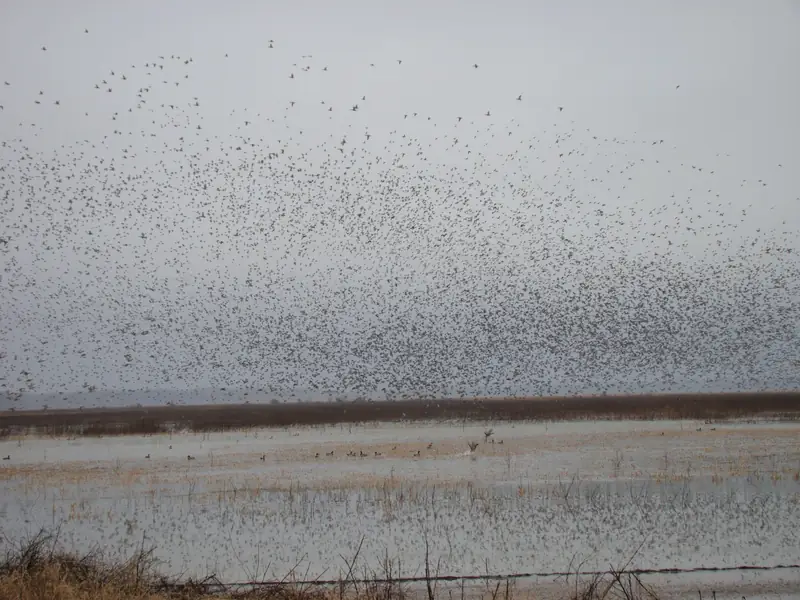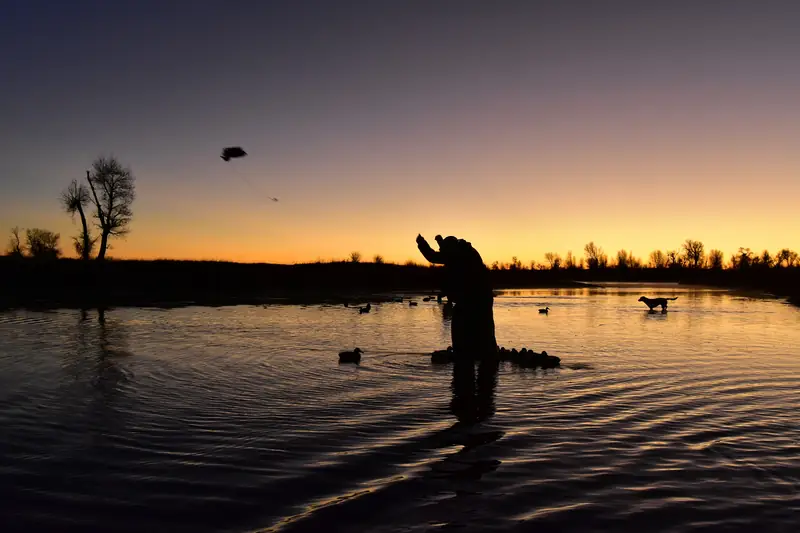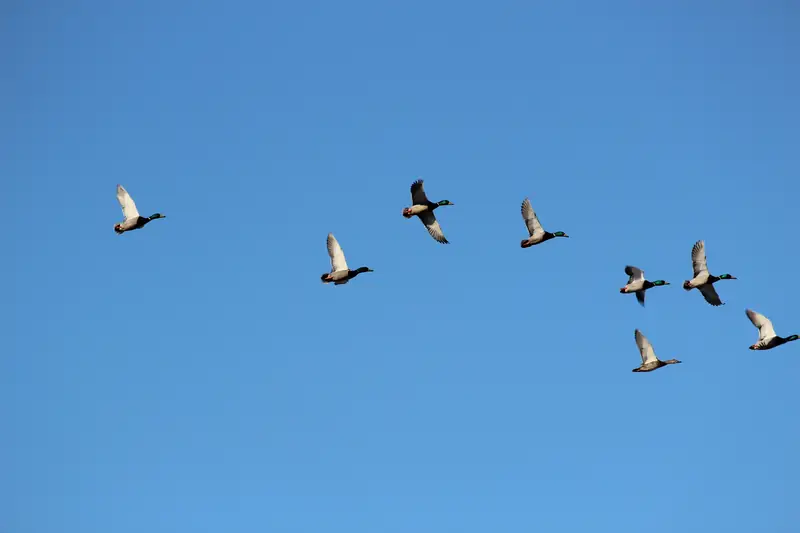
The short version: there should be a few more young ducks in the fall flight than last year. Mallards, the bird most Mid-South hunters care about, are at their lowest breeding count in more than 30 years. Pintails are still far below average. Gadwall, shovelers and divers are in good shape. The biggest question for our season isn't up north, though. It's the drought here at home.
Every number below links to its source and was last checked Oct 22, 2026.
1. The breeding survey: what's coming down the flyway
The U.S. Fish and Wildlife Service published its 2026 Waterfowl Population Status report in September. It's based on the May aerial and ground surveys of the breeding grounds (USFWS 2026 report, PDF). The numbers below are for the "traditional survey area" (the prairies, parklands and boreal forest where most Mississippi Flyway ducks are raised).
| Species | 2026 estimate | vs. 2025 | vs. long-term average |
|---|---|---|---|
| Total ducks | 33.4 million | Similar | −6% |
| Mallard | 5.9 million | −11% | −26% |
| Gadwall | 2.4 million | Similar | +13% |
| American wigeon | 2.9 million | Similar | Similar |
| Green-winged teal | 2.3 million | Similar | Similar |
| Blue-winged teal | 4.0 million | Similar | −22% |
| Northern shoveler | 3.3 million | +19% | +24% |
| Northern pintail | 2.0 million | Similar | −48% |
| Redhead | 0.9 million | Similar | +26% |
| Canvasback | 0.8 million | Similar | +32% |
| Scaup (lesser + greater) | 4.2 million | Similar | −15% |
Source: USFWS, Waterfowl Population Status, 2026, summary pp. iii–iv. "Similar" is the report's own wording for a change within its margin of error.
Mallards. AGFC notes this is the lowest spring mallard count in that region since 1993, and roughly half the number estimated less than a decade ago (AGFC, Oct 7, 2026). That's the headline for anyone hunting green timber.
Divers. Redheads and canvasbacks are well above average. If you hunt Reelfoot's open water, the big Corps reservoirs or the river, the diver outlook is the best news in the report.
Gadwall and shovelers make up a lot of Mid-South straps, and both are above average.
2. Pond counts: better water up north
Breeding ducks follow water, and this spring had more of it.
- Total May ponds (Prairie Canada plus the north-central U.S.): 4.8 million, up 14% from 2025 but 9% below the long-term average.
- Prairie Canada: 3.3 million ponds, up 29% and about at the long-term average.
- North-central U.S. (the Dakotas and Montana): 1.5 million, similar to 2025 and 15% below average.
(USFWS 2026 report, p. iii.) AGFC adds that 2025's count was the lowest since 2004, so this year's bump is from poor to fair, not to good (AGFC).
Production signals since then:
- North Dakota's July brood survey was up 55% from 2025, and the state expects a fall flight about 9% higher than last year (North Dakota Game and Fish, July 27, 2026).
- Ducks Unlimited's field reports describe good production across Prairie Canada, and hot, dry late-July weather that dried shallow wetlands in the U.S. prairies (DU Field Reports: 2026 Fall Flight Outlook).
- DU's scientists expect the fall flight to be comparable to or better than 2025, despite the lower breeding count, because of better nesting conditions (DU Waterfowl Season Outlook, Sept 9, 2026).
Our read: expect more juvenile birds than last year, especially gadwall, teal and other prairie species. Young birds decoy better early in the season. Just don't expect a mallard boom.
3. What the Mid-South agencies are saying
Arkansas (AGFC)
AGFC's waterfowl program coordinator described breeding numbers as largely unchanged except for mallards. He said better habitat in Prairie Canada may add a few more ducks to the fall flight than last year. AGFC also said the state is entering its 14th straight month of drought, and that water isn't available to begin flooding much of the state's traditionally flooded areas in late October through November (AGFC, Oct 7, 2026).
Last season shows how much water matters. In AGFC's mid-December 2025 aerial survey, the Cache River zone held about 278,000 ducks, but by the late-January 2026 survey that had fallen to about 54,000 as the drought dried the woods (AGFC surveys and reports). AGFC usually flies surveys around mid-December, early January and late January (same page).
Mississippi (MDWFP)
We didn't find a 2026-27 season outlook from MDWFP as of Oct 22. MDWFP's Delta aerial surveys usually run about four times a season, starting in November (MDWFP aerial survey reports). Its weekly "Weekly Wingbeat" reports started in early December last season (MDWFP weekly reports). We'll summarize both here as they come out.
Tennessee (TWRA)
We didn't find a TWRA season outlook either. TWRA counts its refuges about every two weeks from November through February (TWRA waterfowl counts). Last season was weak in West Tennessee. Eagle Lake Refuge next to Shelby Forest counted about 20,200 ducks on Dec 2, 2025 and about 15,800 on Jan 5, 2026, well under its January peaks of roughly 74,000–84,000 in recent better years (same page; see our Shelby Forest guide).
Louisiana (LDWF)
LDWF flies September, November, December and January surveys (LDWF aerial surveys). Not confirmed That page blocked our checks, so we couldn't read the September 2026 report directly. Local press reporting on it says biologists counted about 73,000 blue-winged teal, 28% below 2025, that the southwest transect data were lost to an equipment failure, and that drought left very little flooded agricultural habitat in southwest Louisiana (The Daily Iberian, Sept 23, 2026). Treat those as press-reported numbers until the LDWF report can be checked.
Draw deadlines and season openers, sent before they close.
We're setting up short email alerts for Arkansas, Tennessee, Mississippi and Louisiana. There's nothing to sign up for yet. Check back here.
4. Water at home: the deciding factor
Read Oct 22, 2026 (early morning, Central):
| Gauge | Reading | What it means | Source |
|---|---|---|---|
| Mississippi River at Memphis | 2.85 ft (2 a.m.); NWS forecast falls to about −2.9 ft by Nov 4 | Very low. The river isn't backing water into Shelby Forest's bottoms or Tunica Cutoff (the river enters Tunica above about 6 ft) | NWS MEMT1; Tunica guide |
| Mississippi River at Tunica/Mhoon Landing | 2.3 ft; forecast about −3.8 ft by Nov 5 | Same story downriver | NWS MHOM6 |
| Cache River at Patterson, AR | 2.34 ft (flood stage 9) | Timber dry; channel only | NWS PTTA4 |
| Reelfoot Lake near Tiptonville | 11.06 ft on the USGS gauge | About 1–2 ft below the lake's normal low-water mark; shallow grass holes dry | USGS 07027000; Reelfoot guide |
| St. Francis Sunken Lands (Tulot) | About 209.8 ft (11 p.m. Oct 21) | About 2 ft under AGFC's 212-ft duck-season pool target | USACE SF126; St. Francis guide |
The Oct 13 Drought Monitor had exceptional drought expanding in Arkansas and northern Louisiana (USDM). NOAA's winter outlook leans wet for the Lower Mississippi Valley (our breakdown), but that's a seasonal tilt, not a forecast for November.
5. Putting it together: our Mid-South forecast
These are our judgments from the data above.
- Opening weeks (late Nov–early Dec): expect birds to be concentrated on refuges, reservoirs, managed moist-soil units and pumped fields, with little flooded timber unless big rain comes first. Gadwall, teal, shovelers and early divers will make up more of the bag than mallards. Public freelance water will be crowded where there's water at all. Read our low-water playbook.
- Mid-season (mid-Dec–early Jan): this is the swing period. If the wet El Niño pattern brings real rain and a couple of hard fronts push birds out of a warm Midwest, it could turn fast. If it stays dry, expect last year's pattern: brief pulses, then birds stacked on refuges.
- Late season (mid–late Jan): strong El Niño winters lean warm to our north (CPC). That can mean fewer big late pushes, but any hard cold snap is worth burning vacation for.
- Species to bet on: gadwall, shovelers, green-winged teal, ring-necks and other divers. Species to manage expectations on: mallards and pintails.
Bag limits haven't changed for that. All four states still allow 4 mallards (2 hens) and a 6-duck daily limit. Pintail limits are 3 in AR, MS and TN, and Louisiana allows 3 with no more than 1 hen (state law pages; LDWF). Shooting fewer drake-heavy mallard limits is your call. Many hunters will pass on hens this year.
6. What we'll update and when
- Weekly: river gauges and fronts on our migration map, plus a written migration report each week in season.
- As published: AGFC, MDWFP, LDWF and TWRA aerial and refuge counts, summarized with links.
- Nov 19: NOAA's next seasonal outlook.
FAQ
How many ducks are there in 2026?
USFWS estimated 33.4 million breeding ducks in the traditional survey area, similar to 2025 and 6% below the long-term average (USFWS 2026 report, checked Oct 22, 2026).
Are mallard numbers down in 2026?
Yes. The breeding estimate was 5.9 million, 11% below 2025 and 26% below the long-term average. AGFC calls it the lowest spring count in that region since 1993 (USFWS; AGFC).
Will Arkansas duck hunting be good in 2026-27?
Breeding numbers are similar to last year, with a few more young birds likely. AGFC says drought is the bigger issue, since there's little water to flood traditional areas in late October and November. The season will depend heavily on rain (AGFC).
When do the Mid-South aerial duck surveys come out?
AGFC usually flies mid-December, early January and late January; MDWFP flies about four times starting in November; LDWF flies September through January; TWRA counts refuges about every two weeks Nov–Feb. Links to each are above.
DU's national pieces are linked as sources. The numbers and wording above are our own reading of the official reports.
Dates, rules and prices on this page were last checked Oct 22, 2026. If an agency page and this article disagree, the agency page wins.
See something wrong or out of date? Report a correction.
We hunt public water in the Mid‑South and write from the agencies’ own pages. Every rule, date and fee links to its official source and shows the day we checked it. Where we couldn’t confirm something, we say so.
How we check our facts